
Search…

Search blog post titles and content.

Kanji & VocabularyN3

Learn the meaning, structure, onyomi (エン), and kunyomi (けむり) of the kanji 煙 (smoke). Master this essential JLPT N3 kanji with common vocabulary and example sentences.

Published at Jul 16, 20264 min read

煙 Meaning, Reading, and Vocabulary|Onyomi エン・Kunyomi けむり

Key takeaways

This kanji represents 'smoke' rising from a fire (火).

Its onyomi is 'エン', used in words like 禁煙 (no smoking) and 喫煙 (smoking).

Its kunyomi readings are 'けむり' (smoke) and 'けむい' (smoky), which are commonly used in daily life.

Kanji at a glance

N3

Meaning

smokesootto be obscured

On reading

エン

Kun reading

けむりけむ.るけむ.い

Radical

火 (fire)

Strokes

13 strokes

Core meaning / core image

Core Meaning

It means 'smoke' rising from a fire, and is also widely used to express a feeling of obscured vision or stuffiness, much like smoke.

Kanji structure breakdown

Structure breakdown

煙 = 火 + 垔

fire

Meaning element

to block

Meaning and phonetic element

It depicts a fire (火) burning but being blocked from above (垔), causing smoke to leak out.

Mnemonic story

Mnemonic story

This character represents smoke rising when a blazing fire (火) is tightly blocked (垔) from above. It came to mean the smoke that leaks out when flames are obstructed.
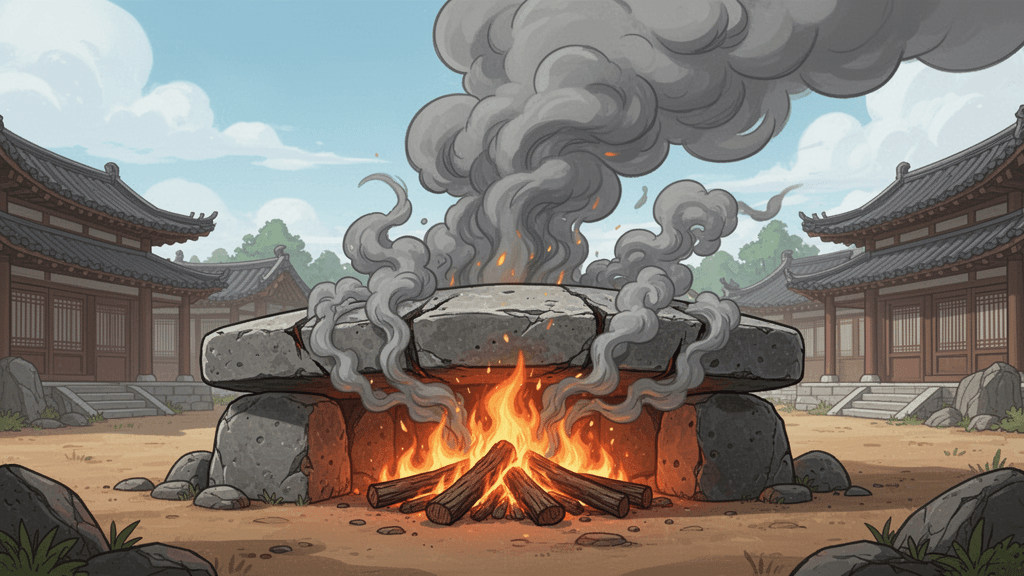
煙 kanji story image

On'yomi and kun'yomi

On reading

エン
  • 禁煙きんえんN4

    no smoking

  • 喫煙きつえんN3

    smoking

  • 煙突えんとつN3

    chimney

It is primarily read as 'エン' in nouns related to tobacco or fire.

Kun reading

けむり
  • けむりN3

    smoke

When used as a noun, it is read as 'けむり'.

けむ.い
  • 煙いけむいN2

    smoky, irritating to the eyes due to smoke

Used as an adjective to express a smoky or irritating feeling.

Commonly used words

  • 禁煙
    きんえん

    no smoking

  • 喫煙
    きつえん

    smoking

  • けむり

    smoke

  • 煙突
    えんとつ

    chimney

  • 煙い
    けむい

    smoky

Example sentences

Example 1

ここから先は禁煙です。

ここからさきはきんえんです。

Kokokara saki wa kin'en desu.

Translation

No smoking from this point onward.

Example 2

火事の時は、に注意してください。

かじのときは、けむりにちゅういしてください。

Kaji no toki wa, kemuri ni chūi shite kudasai.

Translation

Please be careful of smoke in case of a fire.

Example 3

この部屋、ちょっと煙いですね。

このへや、ちょっとけむいですね。

Kono heya, chotto kemui desu ne.

Translation

This room is a bit smoky, isn't it?

Mini quiz

What is the correct reading for '禁煙'?

One-line summary

In a nutshell

煙 (smoke) represents smoke rising from a blocked (垔) fire (火). Remember its onyomi エン (as in 禁煙/喫煙) and kunyomi けむり (smoke)!

FAQ

FAQ

What is the difference between 煙い (けむい) and 煙たい (けむたい)?

Both mean 'smoky' or 'irritating to the eyes due to smoke', but '煙たい' is also frequently used figuratively to mean 'feeling awkward or uncomfortable around someone'.

How are 煙 (けむり) and 湯気 (ゆげ) different?

'煙 (けむり)' refers to 'smoke' produced when something burns, while '湯気 (ゆげ)' refers to 'steam' rising from hot water or food.

煙 Meaning, Reading, and Vocabulary|Onyomi エン・Kunyomi けむり | Daily Nihongo