
Search…

Search blog post titles and content.

Kanji & VocabularyN3

Learn the meaning, structure, and reading (kunyomi) of the Japanese kanji 畑 (field), along with commonly used vocabulary and example sentences.

Published at Jul 14, 20264 min read

畑 Meaning, Reading, and Vocabulary | Kunyomi はたけ

Key takeaways

畑 is a native Japanese kanji (kokuji) that means a field (田) cleared by setting fire (火).

It has no Chinese-style onyomi and is primarily read using the kunyomi はたけ or はた.

It is frequently used in daily life and agriculture-related words such as 田畑 (たはた) and 花畑 (はなばたけ).

Kanji at a glance

N3

Meaning

field

Kun reading

はたはたけ

Radical

田 (field)

Strokes

9 strokes

Core meaning / core image

Core Meaning

Unlike 田 (rice paddy) which is flooded with water to grow rice, 畑 refers to a dry 'field' where crops are grown without flooding. It is a kanji created in Japan (kokuji) and notably lacks an onyomi reading.

Kanji structure breakdown

Structure breakdown

畑 = 火 + 田

fire

Meaning hint

rice paddy/field

Meaning hint

It combines the meanings of setting fire (火) to burn weeds and clear land, and agricultural land (田), to mean a dry 'field'.

Mnemonic story

Mnemonic story

This character depicts a field (田) cultivated by setting fire (火) to burn away weeds. Unlike a flooded rice paddy, it came to mean a dry field cleared by fire.
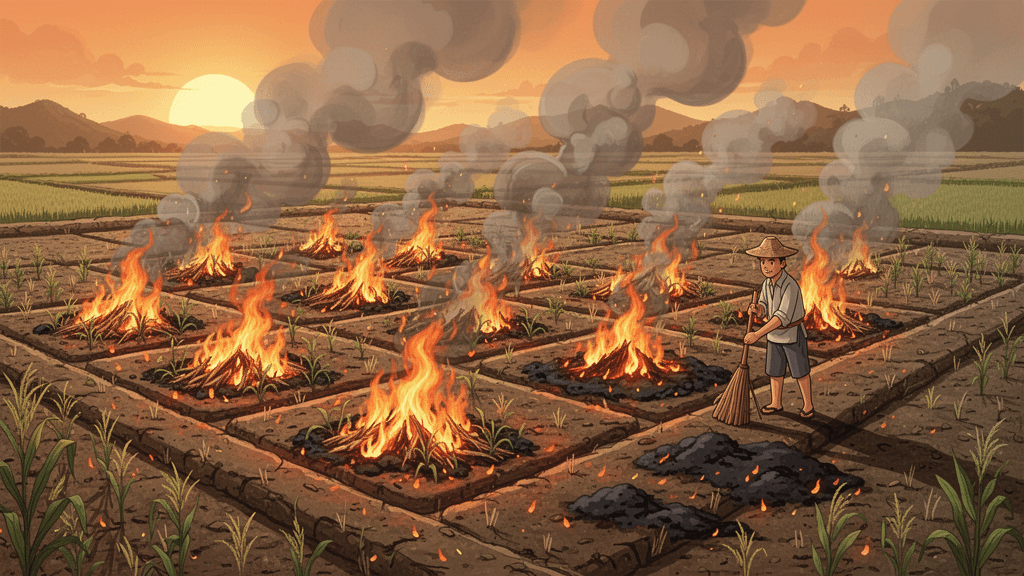
畑 kanji story image

On'yomi and kun'yomi

Kun reading

はたけ
  • はたけ

    field

  • 花畑はなばたけ

    flower field

  • 茶畑ちゃばたけ

    tea plantation

This is the most basic and frequently used reading. When attached to the end of another word, it often undergoes sequential voicing (rendaku) and is pronounced as ばたけ.

はた
  • 田畑たはた

    fields and rice paddies

  • 畑作はたさく

    dry field farming

This is mainly used when combined with other kanji to form compound words.

Commonly used words

  • はたけ

    field

  • 田畑
    たはた

    fields and rice paddies

  • 花畑
    はなばたけ

    flower field

  • 茶畑
    ちゃばたけ

    tea plantation

  • 畑作
    はたさく

    dry field farming

Example sentences

Example 1

祖父は畑で野菜を育てています。

そふははたけでやさいをそだてています。

Sofu wa hatake de yasai o sodatete imasu.

Translation

My grandfather grows vegetables in the field.

Example 2

春になると、美しい花畑が広がります。

はるになると、うつくしいはなばたけがひろがります。

Haru ni naruto, utsukushii hanabatake ga hirogarimasu.

Translation

When spring comes, a beautiful flower field spreads out.

Example 3

この地域は昔から田畑が多いです。

このちいきはむかしからたはたがおおいです。

Kono chiiki wa mukashi kara tahata ga ooi desu.

Translation

This area has had many fields and rice paddies since ancient times.

Mini quiz

Which of the following is the correct reading for the kanji 畑? (Word: 畑)

One-line summary

In a nutshell

畑 is a native Japanese kanji meaning a field (田) cleared by fire (火), and is primarily read as はたけ or はた.

FAQ

FAQ

Why doesn't 畑 have an onyomi (Chinese reading)?

This is because 畑 is not a kanji imported from China, but a kanji created in Japan out of necessity (known as kokuji, 国字). Therefore, it does not have a Chinese-style onyomi reading, only a native Japanese kunyomi reading.

What is the difference between 田 (た) and 畑 (はたけ)?

田 (た) primarily refers to a 'rice paddy' where crops are grown in water, while 畑 (はたけ) refers to a dry 'field' where vegetables or fruits are grown without flooding.

畑 Meaning, Reading, and Vocabulary | Kunyomi はたけ | Daily Nihongo