
Kanji 問: Meaning, Reading, and Vocabulary | Onyomi モン, Kunyomi と.う
The kanji 問 represents the action of asking a question or inquiring about something.
Its onyomi is モン and its kunyomi includes と.う and とい. It frequently appears in daily conversation and exams.
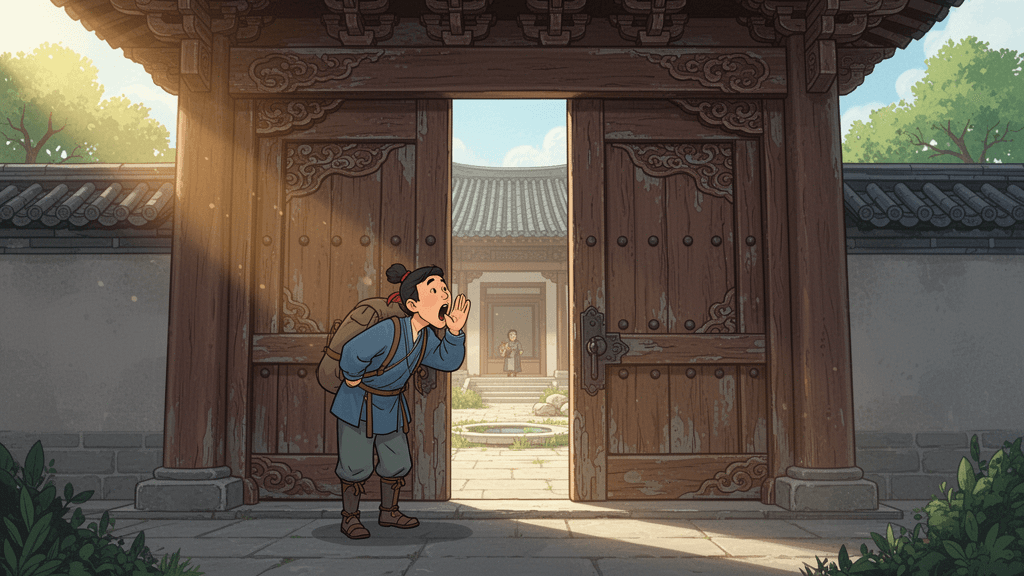
It combines a gate (門) and a mouth (口), originating from the image of opening one's mouth at a gate to call out to someone.
Kanji at a glance
Core meaning / core image
The kanji 問 means 'to ask' or 'to question' in order to find out something unknown. It is mainly used when asking about things you are curious about in studies or daily life, such as in 問題 (problem) or 質問 (question).
Kanji structure breakdown
Mnemonic story
This character depicts someone standing in front of a gate (門) and opening their mouth (口) to call out. This evolved into the meaning of asking a question to the person inside.
On'yomi and kun'yomi
On reading
Kun reading
Commonly used words
Example sentences
Mini quiz
Which of the following words contains the correct onyomi (Chinese reading) for the kanji 問?
One-line summary
Picture someone asking a question with their mouth (口) at a gate (門). 問 is a core kanji used when asking about something you want to know, as seen in words like 問題 (problem) and 質問 (question).
FAQ
How do you distinguish between 問 and 聞?
問 has a mouth (口) inside a gate (門), carrying the active meaning of 'to ask' or 'to question.' On the other hand, 聞 has an ear (耳) inside a gate (門), meaning 'to listen' or 'to hear.' You can easily tell them apart visually by checking whether there is a mouth (口) or an ear (耳) inside.
How do you read 問屋?
問屋 means 'wholesaler' and is read as とんや (tonya), which is an exception to the usual reading rules. Since it's an irregular pronunciation, it's best to memorize the word as a whole.
