
秋 Meaning, Reading, and Vocabulary Guide | Onyomi シュウ, Kunyomi あき
The kanji 秋 (autumn) combines rice (禾) and fire (火) to represent the harvest season of 'autumn'.
It is read as シュウ (onyomi) and あき (kunyomi), and is an essential JLPT N4 kanji.
It is frequently used in words related to daily life and seasons, such as 秋 (あき) and 秋冬 (しゅうとう).
Kanji at a glance
Core meaning / core image
秋 means 'autumn', the third of the four seasons. Since it is the time for harvesting crops, it is sometimes used metaphorically to represent an important time or period.
Kanji structure breakdown
Mnemonic story
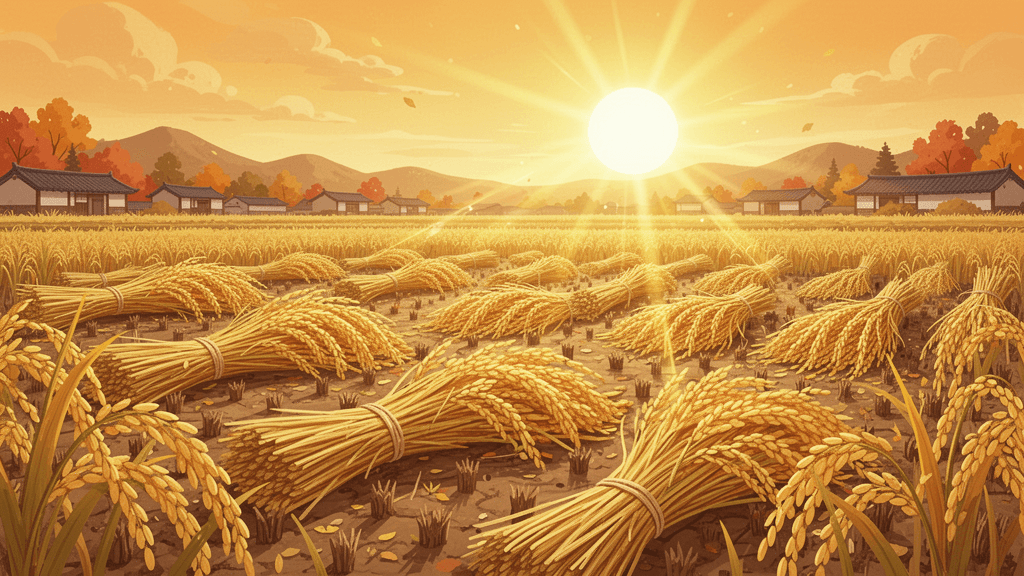
This character depicts harvested rice (禾) being dried under sunlight as hot as fire (火). The season when crops ripen and are harvested came to mean autumn.
On'yomi and kun'yomi
On reading
Kun reading
Commonly used words
Example sentences
Mini quiz
Which of the following is the correct kunyomi for '秋'?
One-line summary
秋 is a kanji that combines rice (禾) and fire (火) to represent the harvest season, and is mostly read as あき in everyday life.
FAQ
Are there any famous Japanese expressions related to 秋?
In Japan, autumn is considered a great season for doing things, so expressions like '読書の秋' (autumn of reading), '食欲の秋' (autumn of appetite), and 'スポーツの秋' (autumn of sports) are frequently used.
In what kind of words is the onyomi シュウ for 秋 mainly used?
It is mainly used in solar terms or kanji words with two or more characters. For example, you can find it in words like 秋分 (しゅうぶん, autumnal equinox) and 秋冬 (しゅうとう, autumn and winter).
